



If your desire feels muted, disconnected, or missing entirely—you’re not imagining it, and you’re certainly not alone. Sexual dysfunction affects an estimated 50-70% of postmenopausal women, yet many never seek help, and those who do often find conventional care inadequate. The frustrating truth? Most conventional medicine wasn’t designed to address what’s actually happening in your body. The root cause isn’t aging, stress, or relationship issues—it’s hormone imbalance. And it has real solutions. Inner Balance offers a comprehensive approach through Oestra™ hormone therapy for foundational hormonal restoration and Libida™ for targeted desire support when hormones alone aren’t enough.
Key Takeaways
- Desire declines for biological reasons: Falling estrogen, progesterone, and testosterone directly affect your brain’s arousal pathways, vaginal tissue health, and emotional connection circuits
- Pain must be addressed first: Many women report improved vaginal dryness with hormone therapy—and you can’t feel desire when intimacy hurts
- Hormones lay the foundation: Vaginal delivery of bioidentical estradiol and progesterone provides significantly higher bioavailability than oral forms, bypassing liver metabolism
- Desire lives in the brain: When hormonal balance is restored but desire still feels flat, the missing piece may be neurochemical—addressing dopamine and oxytocin pathways directly
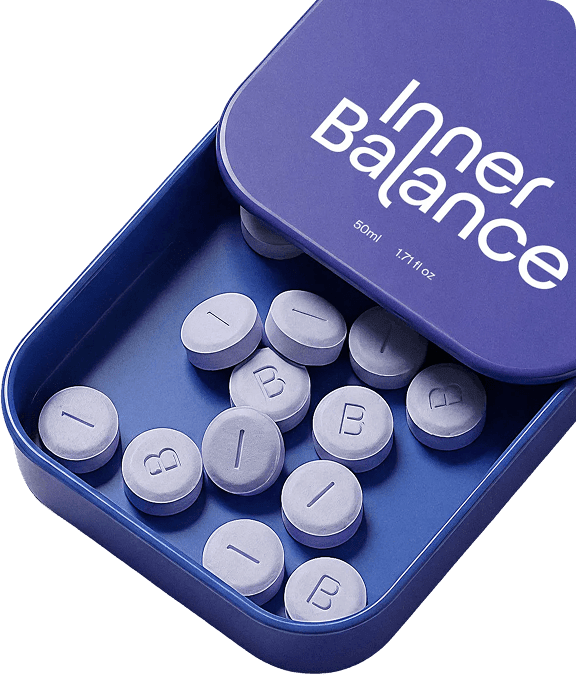
- Dual-pathway solutions exist: Libida™ combines bremelanotide (the same active ingredient in injectable treatments) with oxytocin in a convenient sublingual tablet
- Multimodal approaches work best: Combining hormonal restoration with psychological strategies like mindfulness produces the strongest, most sustained improvements


Understanding Why Menopause Steals Your Desire
The Hormonal Shift: More Than Just Estrogen
When most women think about menopause and low libido, they think estrogen. But the picture is far more complex. Progesterone—especially the progesterone produced after ovulation—often becomes less consistent as women move through their late reproductive years and into perimenopause, sometimes before estrogen levels settle into a sustained decline. This progesterone drop affects your GABA receptors (your brain’s natural calming system), disrupts sleep, increases anxiety, and quietly undermines your capacity for relaxation and connection.
Then estrogen fluctuates wildly during perimenopause, causing vasomotor symptoms that disrupt sleep and leave you exhausted. Meanwhile, testosterone—the hormone most directly tied to desire—also declines, often leaving women with dulled motivation, reduced fantasies, and a sense that their “spark” has simply vanished.
The compounding effect? Your brain chemistry changes. Estrogen regulates serotonin and dopamine—neurotransmitters that govern mood, motivation, and arousal. Hormonal shifts affect not just physical symptoms but cognitive and emotional responsiveness.
When Pain Becomes the Primary Barrier
Here’s what many women don’t realize: you can’t fix desire if intimacy hurts. Genitourinary Syndrome of Menopause (GSM) affects the majority of postmenopausal women, causing vaginal dryness, tissue thinning, reduced elasticity, and pain during sex. When your body anticipates discomfort, your brain protects you by shutting down arousal before it starts.
GSM creates a vicious cycle: pain leads to avoidance, avoidance leads to further tissue atrophy, and the psychological association between intimacy and discomfort becomes deeply ingrained. This is why addressing vaginal health must come first—before any intervention targeting desire can succeed.
The Psychological Layer
Hormone imbalance doesn’t just affect your body; it reshapes your relationship with yourself. Many women describe feeling “disconnected” from their bodies, experiencing reduced body confidence, and struggling with the psychological weight of changes they weren’t prepared for. When hormones are optimized, cognitive clarity and emotional resilience improve—but desire involves more than biology. It requires feeling safe, present, and emotionally connected.
The Foundation: Restoring Hormonal Balance First
Why Vaginal Delivery Changes Everything
If you’ve tried oral hormone therapy without success, the problem may not be the hormones—it’s how they’re delivered. Oral progesterone and estrogen undergo “first-pass metabolism” in your liver, which converts a significant portion of the hormone into metabolites. These breakdown products often cause daytime drowsiness, mood swings, and that frustrating “hungover” feeling—while delivering inconsistent tissue levels.
Vaginal delivery bypasses this metabolic roadblock entirely. The vaginal wall is richly vascularized, draining directly into pelvic veins and the systemic bloodstream—no gut, no liver detour, no liver burden. The result? Significantly higher bioavailability, stable hormone levels, and fewer side effects.
Oestra™ delivers both bioidentical estradiol and progesterone vaginally, achieving systemic effects through what’s called the “first uterine pass effect.” This means hormones reach your uterus and reproductive tissues first, then diffuse into general circulation—providing both targeted and whole-body benefits.
What Women Actually Experience
Inner Balance data shows significant improvements across the symptoms that steal intimacy:
- Vaginal dryness: Approximately 97% report improvement
- Sex drive and arousal: Around 75% see positive changes
- Sleep quality: Approximately 80% experience better rest
- Mental health: Around 79% report mood improvements
- Brain fog: Approximately 68% experience clearer thinking
Building the Hormonal Foundation
For most women with intimacy concerns, restoring hormonal balance addresses multiple barriers simultaneously:
What Estradiol Does:
- Restores vaginal tissue health and natural lubrication
- Improves blood flow to pelvic tissues
- Supports dopamine and serotonin for mood and motivation
- Reduces vasomotor symptoms disrupting sleep
What Progesterone Does:
- Calms the nervous system through GABA enhancement
- Improves sleep quality and stress resilience
- Supports the body’s natural hormone pathways
- Protects the uterine lining when combined with estrogen
Progesterone naturally converts to other hormones through the body’s enzymatic pathways—meaning bioidentical progesterone supplementation can support your body’s hormone production without the side effects of direct hormone therapy, like acne or hair thinning.
When Hormones Aren’t Enough: Addressing the Brain-Desire Connection
The Missing Piece
Here’s what no one tells you: some women optimize their hormones, resolve vaginal discomfort, sleep better, and feel more energetic—yet desire still feels flat. Their body is ready for intimacy, but the mental “spark” remains muted.
This isn’t a failure of hormone therapy. It’s evidence that female desire involves more than hormonal balance. The brain’s arousal circuitry—the hypothalamus, dopamine pathways, and emotional connection centers—sometimes needs direct support.
How Female Desire Actually Works
Female desire isn’t like a light switch. It involves two interconnected pathways:
The Neurochemical Pathway: Dopamine, motivation, anticipation, sexual thoughts, and the mental “wanting” that precedes physical arousal. This pathway is governed by melanocortin receptors in the hypothalamus.
The Emotional-Connection Pathway: Oxytocin, bonding, relational warmth, emotional safety, and the ability to relax into intimacy. This pathway determines whether you feel emotionally available, not just physically capable.
Libida™: A Dual-Pathway Solution
Libida™ represents a fundamentally different approach—one designed specifically for female neurobiology. It combines bremelanotide (which activates melanocortin receptors to boost dopamine, motivation, and arousal) with oxytocin (which supports bonding, emotional readiness, and relational warmth).
How It Works:
- Bremelanotide: Activates melanocortin receptors in the hypothalamus, boosting dopamine and restoring the neurochemical foundation of desire—motivation, anticipation, and responsiveness
- Oxytocin: Supports emotional safety, connection, and the ability to relax into intimacy—reflecting how women’s sexuality actually functions
Key Features:
- Sublingual tablet—no injections required
- On-demand use: take 45-60 minutes before intimacy
- Effects may last 24-72 hours
- Non-hormonal: compatible with any hormonal status
- Can be used with or without Oestra™
Libida™ contains the same active ingredient used in injectable treatments for desire. It’s compounded for off-label use under clinician guidance, offering the benefits of proven pharmacology in a more accessible form.
Who Benefits Most from Libida™
Libida™ is designed for women whose:
- Desire feels muted, disconnected, or missing
- Spark has vanished—even if hormones seem balanced
- Hormones are addressed but desire still feels flat
- Experience matches “I love my partner, but I never feel like it”
- Haven’t fully responded to hormone therapy alone
- Want a non-hormonal, on-demand, brain-first option
At an estimated $8-$10 per use, Libida™ offers a cost-effective alternative to competitors charging significantly more per experience.
Mind-Body Approaches: The Evidence-Based Complement
Why Psychological Strategies Matter
Even with optimal hormones and brain-pathway support, desire involves your whole self—your thoughts, your relationship, your stress levels, and your ability to be present during intimacy. Psychological interventions like cognitive behavioral therapy (CBT) and mindfulness produce excellent outcomes for desired concerns, with benefits sustained at one-year follow-up.
Mindfulness-Based Approaches
Mindfulness reduces “spectatoring”—the tendency to observe and judge yourself during sex rather than experiencing it. Clinical evidence shows mindfulness enhances attention to erotic cues, reduces cognitive distraction, and fosters “responsive” desire—the type of desire that emerges in response to stimulation rather than appearing spontaneously.
Eight-week mindfulness programs (available in-person, online, or via apps) consistently improve desire, arousal, and satisfaction while reducing distress about sexual function.
Pelvic Floor Health
Your pelvic floor affects sensation, arousal, blood flow, and even orgasm intensity. Research confirms that pelvic floor muscle training improves all domains of sexual function—desire, arousal, lubrication, orgasm, and satisfaction.
Pelvic floor dysfunction is surprisingly common during perimenopause and menopause, contributing to pain, reduced sensation, and urinary symptoms that undermine sexual confidence. Assessment by a pelvic floor physiotherapist can identify whether excess tension or weakness is contributing to intimacy concerns.
Sensate Focus for Couples
Sensate focus—structured touching exercises that remove performance pressure—has helped couples rebuild intimacy for decades. The approach involves phases of non-genital touch focused purely on sensation, gradually progressing while maintaining communication about positive experiences. This strategy addresses performance anxiety, cognitive distraction, and avoidance patterns that develop after prolonged painful or unsatisfying intimacy.
Lifestyle Foundations That Support Desire
You can’t feel desire when you’re exhausted. Hormone optimization improves sleep—approximately 80% of women using Oestra™ report better sleep quality—but lifestyle factors matter too. Prioritizing 7-8 hours of quality sleep, managing caffeine timing, and addressing vasomotor symptoms that disrupt rest creates the energy foundation desire requires.
Regular physical activity improves blood flow to pelvic tissues, enhances mood through endorphin release, and supports body confidence. Even 150 minutes weekly of moderate exercise shows measurable benefits for sexual function.
Chronic stress keeps your nervous system in “fight or flight”—the opposite of the relaxed state required for arousal. Progesterone naturally calms the nervous system, but practices like deep breathing, regular movement, and boundary-setting amplify these effects.
Personalized Care: Why Expert Guidance Matters
The Problem with Conventional Care
Too many women hear “it’s just aging” or “have you tried lubricant?” from providers uncomfortable discussing sexual health. Many women who seek help find their care inadequate—often because conventional medicine wasn’t designed to address root causes.
At Inner Balance, board-certified physicians provide personalized treatment plans based on your symptoms—not just lab numbers. Labs can be helpful but fluctuate significantly throughout the day and may not reflect tissue levels. What matters is how you feel.
The Comprehensive Approach
Inner Balance offers what fragmented care cannot: a coordinated system addressing hormone imbalance at its root while providing targeted solutions when additional support is needed.
Oestra™ restores foundational hormonal balance—addressing mood, sleep, vaginal health, energy, and the hormonal substrate of desire.
Libida™ addresses the brain-desire connection when hormones are optimized but the neurochemical spark needs direct support.
BodyMatched™ supports skin health affected by hormonal changes, helping women feel confident and comfortable in their bodies—an often-overlooked component of sexual self-image.
Together, these solutions offer an inside-out approach to intimacy concerns that conventional medicine rarely provides.
Taking the First Step
If your desire feels like a distant memory—if you love your partner but never “feel like it”—know that your symptoms have a biological explanation and real solutions exist. Hormone imbalance affects every system in your body, and intimacy concerns are often the most personally distressing symptom women experience.
You don’t need more willpower. You need your hormones restored, your brain pathways supported, and a care team that believes what you’re experiencing is real.
Frequently Asked Questions
Can hormone therapy alone restore my sex drive?
For many women, restoring hormonal balance with bioidentical estradiol and progesterone significantly improves desire—particularly when addressing vaginal dryness, sleep disruption, and energy levels. However, desire involves brain pathways beyond hormones. If you’ve optimized hormones but desire still feels flat, targeted neurochemical support like Libida™ may provide the missing piece. The dual-pathway approach often produces the strongest results.
How long does it take to see improvements in desire?
Vaginal health improvements often appear within 2-4 weeks of starting therapy. Systemic benefits—including mood, energy, and desire—typically develop over 3-6 months as hormone levels stabilize. Inner Balance data shows around 75% of women report improved sex drive and arousal, with many noticing changes within the first month. Patience matters: give your body time to respond.
Is Libida™ safe with Oestra™?
Yes. Libida™ is non-hormonal and compatible with any hormonal status. It works through different pathways than hormone therapy—activating melanocortin receptors and oxytocin pathways in the brain rather than replacing estrogen or progesterone. Many women use both when they want foundational hormonal support plus on-demand desire enhancement.
Should I address vaginal dryness before trying treatments for low desire?
Yes. Pain is the most common barrier to desire, and your brain protects you by suppressing arousal when it anticipates discomfort. Addressing vaginal dryness, tissue thinning, and pain creates the foundation for desire to return. Many women report improved vaginal dryness with hormone therapy. Once intimacy is comfortable again, desire often naturally improves.
What makes Libida™ different from other desired treatments?
Libida™ is the only product combining bremelanotide with oxytocin—addressing both the neurochemical spark of desire (dopamine, motivation, anticipation) and the emotional-connection pathways (bonding, relaxation, relational warmth) that shape how women experience arousal. It delivers the same active ingredient in a convenient sublingual tablet at an estimated $8-$10 per use—significantly more accessible than alternatives.


