



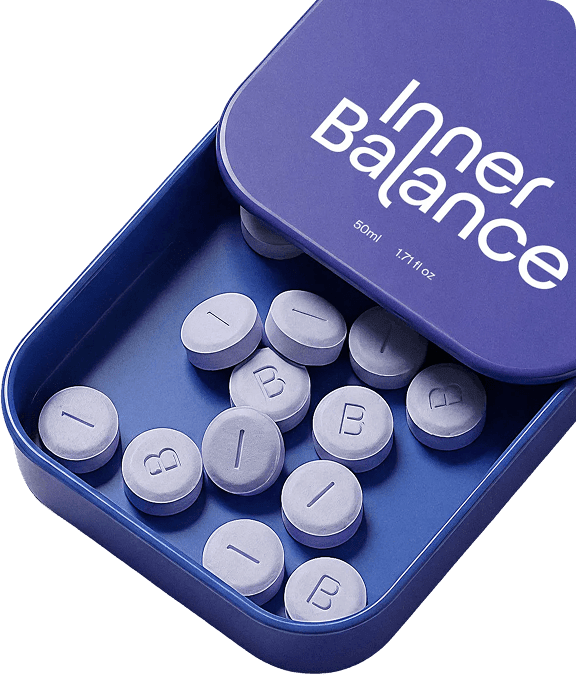
If you’ve ever felt like your desire has gone quiet—like you love your partner but rarely feel that pull toward intimacy—you’re not imagining things. For millions of women, low libido isn’t about attraction or relationship quality. It’s about brain chemistry, specifically a neuropeptide called oxytocin that shapes how women experience connection, trust, and sexual desire. While many treatments focus narrowly on hormones or arousal gels, Inner Balance’s Libida™ takes a fundamentally different approach. By combining bremelanotide with oxytocin in a single sublingual tablet, Libida™ addresses both the neurochemical spark of desire and the emotional pathways that make intimacy feel safe and desirable—reflecting how women’s sexuality actually works.
Key Takeaways
- Oxytocin functions as the biological foundation of female bonding, with research showing couples in early attachment have significantly higher oxytocin levels than singles
- Women’s stress response is uniquely oxytocin-mediated through the “tend-and-befriend” pattern, which explains why chronic stress devastates female desire
- Recent research from Brigham and Women’s Hospital and Harvard Medical School suggests oxytocin may act as a natural mood buffer during hormonal transitions like perimenopause and menopause
- Oxytocin rises during sexual arousal and orgasm, creating a positive feedback loop between physical intimacy and emotional connection
- Most libido treatments address only physical arousal, missing the emotional-safety pathways where women’s desire actually originates
- Libida™ is a women-first libido solution combining bremelanotide + oxytocin to address both neurochemical desire and bonding pathways
- Effects from a single dose may last 24-72 hours, offering on-demand support without daily pills or injections


1. Oxytocin Strengthens Romantic Pair Bonding
The foundation of female intimacy begins with attachment—and oxytocin is the hormone that makes lasting connection possible. When researchers measured oxytocin levels in new couples versus single individuals, they found something striking: couples in early attachment showed plasma oxytocin levels approximately double those of unattached individuals.
Even more compelling, these elevated oxytocin levels predicted relationship longevity:
- Couples with higher initial oxytocin were significantly more likely to stay together six months later
- The hormone correlated directly with interactive reciprocity and affectionate touch
- Higher oxytocin levels predicted more positive affect between partners
- Elevated oxytocin was associated with what researchers call “synchronized dyadic states”—those moments when partners feel perfectly in tune
Why This Matters for Desire
Romantic bonding isn’t separate from sexual desire—it’s the foundation. When oxytocin levels decline due to stress, hormonal shifts, or relationship distance, the sense of deep connection that makes intimacy appealing can fade. You might still love your partner intellectually while feeling emotionally distant physically.
Libida™ addresses this directly by including oxytocin alongside bremelanotide. Rather than forcing physical arousal without emotional readiness, it supports the bonding chemistry that makes intimacy feel natural and desired.
2. Oxytocin Enables Women’s Unique Stress Response
Women don’t respond to stress the same way men do—and this difference is mediated largely by oxytocin. While the classic “fight-or-flight” response dominates male stress biology, women exhibit a distinct pattern called “tend-and-befriend” that Dr. Shelley Taylor first identified at UCLA.
When stressed, women instinctively:
- Seek social support and connection
- Nurture relationships as a coping mechanism
- Experience oxytocin buffering the fight-or-flight response
- Show connection-seeking behavior rather than isolation
This occurs because oxytocin buffers the fight-or-flight response and encourages connection-seeking behavior. Notably, estrogen enhances oxytocin’s effects while testosterone suppresses them—explaining why this stress response is particularly pronounced in women.
The Stress-Desire Connection
Chronic stress doesn’t just make you tired; it actively suppresses the neurochemistry of desire:
- When cortisol stays elevated, oxytocin can’t function effectively
- You might feel disconnected from your partner even in calm moments
- Disinterest in intimacy becomes persistent rather than occasional
- The ability to relax into closeness diminishes even when circumstances seem right
This explains why “just relax” advice fails so spectacularly for women with low libido. You can’t willpower your way past biology. Supporting oxytocin pathways helps restore the calm, connected state where desire can emerge naturally.
3. Oxytocin Enhances Sexual Arousal and Intensifies Orgasm
Beyond emotional bonding, oxytocin plays a direct role in physical sexual response. During arousal and orgasm, oxytocin levels rise in women, strengthening feelings of pleasure and emotional connection.
This creates a positive feedback loop:
- Intimacy triggers oxytocin release
- Oxytocin deepens feelings of pleasure and connection
- Enhanced pleasure makes future intimacy more appealing
- The cycle reinforces both physical satisfaction and emotional bonding
The hormone literally makes sexual experiences feel better and more satisfying.
Breaking the Low-Desire Cycle
When oxytocin is low—due to stress, poor sleep, hormonal changes, or lack of physical touch—desire often drops accordingly. This creates a vicious cycle:
- Avoiding intimacy leads to less oxytocin production
- Lower oxytocin makes desire feel even more distant
- The gap between you and your partner widens
- Intimacy becomes increasingly difficult to initiate
The solution isn’t about “trying harder” but about supporting the neurochemistry that makes desire possible.
Libida™ helps break this cycle by providing oxytocin support alongside the desire-boosting effects of bremelanotide. Instead of forcing arousal artificially, it addresses both the motivation to be intimate and the biological pathways that make intimacy pleasurable.
4. Oxytocin Creates Emotional Safety for Vulnerability
Desire doesn’t exist in isolation—it requires feeling safe enough to be vulnerable. Oxytocin facilitates this by:
- Reducing anxiety and promoting calmness
- Creating trust in intimate relationships
- Generating emotional conditions where intimacy feels possible rather than threatening
- Softening defensive responses to vulnerability
Research shows oxytocin can even create “rose-colored glasses” in relationships. Women with higher oxytocin levels perceived their partners as more responsive regardless of actual behavior, suggesting the hormone facilitates bonding by softening judgment and promoting connection.
Why Emotional Readiness Matters
For many women, low desire isn’t about physical sensation—it’s about not feeling emotionally ready for intimacy:
- Stress makes vulnerability feel unsafe
- Relationship tension creates emotional guardedness
- Daily life exhaustion depletes the capacity for openness
- Your nervous system signals caution even when your mind wants connection
You might intellectually want connection while your nervous system signals caution.
This is precisely why treatments focused only on physical arousal often disappoint. They address the body without considering the emotional landscape where female desire actually lives. Libida™’s inclusion of oxytocin recognizes that emotional readiness isn’t separate from desire—it’s foundational to it.
5. Oxytocin Protects Mood During Hormonal Transitions
Perhaps the most relevant finding for women experiencing low libido during perimenopause or menopause comes from recent research at Brigham and Women’s Hospital and Harvard Medical School.
In a study of premenopausal women, researchers found that:
- Oxytocin levels rise in response to sleep disruption
- Women with higher oxytocin levels before disrupted sleep experienced significantly less mood disturbance the next day
- The hormone appears to serve as “a potential biological buffer during periods of hormonal and emotional vulnerability”
- This protective effect operates independently of other hormone levels
Implications for Midlife Desire
During perimenopause and menopause, sleep fragmentation is common, and mood instability can undermine desire even when hormones are being addressed:
- Sleep disruption affects oxytocin regulation
- Mood instability creates emotional distance from intimacy
- Even optimized estrogen and progesterone may not fully restore desire
- Oxytocin support may provide an additional pathway to restored intimacy
For women whose desire remains flat despite hormone optimization, this research suggests oxytocin’s mood-protective effects could be the missing piece. Libida™ offers this support in a targeted, on-demand format that complements comprehensive hormone therapy like Oestra™.
6. Oxytocin Supports Relaxation and Readiness for Connection
Sexual desire requires a calm nervous system. When you’re hypervigilant, overwhelmed, or running on adrenaline, your body prioritizes survival over reproduction. Oxytocin is associated with calming effects that support a more relaxed, receptive state.
This explains why the best sex often happens on vacation or during relaxed weekends—your nervous system finally allows desire to surface:
- Stress hormones decrease
- The body enters a receptive state
- Mental space opens for intimate thoughts
- Physical relaxation enables arousal
- Connection feels possible rather than exhausting
For women juggling careers, caregiving, and countless responsibilities, that relaxed state can feel impossible to achieve.
Creating Conditions for Desire
Supporting oxytocin doesn’t guarantee arousal, but it creates the neurobiological conditions where desire becomes possible:
- The nervous system shifts from defensive to receptive
- Anxiety gives way to openness
- The gap between wanting to want and actually wanting narrows
- Intimacy feels like connection rather than obligation
It’s the difference between trying to feel sexy while anxious versus being genuinely open to connection.
Libida™’s sublingual format delivers oxytocin approximately 45-60 minutes before intimacy, allowing time for your nervous system to settle into readiness. Combined with bremelanotide’s effects on motivation and arousal, it addresses the preparation phase that traditional treatments ignore.
7. Oxytocin Works Synergistically with Dopamine Pathways
Female desire isn’t driven by a single neurochemical—it emerges from the interaction of multiple systems:
- Oxytocin creates bonding, emotional safety, and connection
- Dopamine generates motivation, anticipation, and wanting
- Together they produce integrated desire involving mind, emotion, and body
- When both systems function well, you don’t just feel capable of intimacy—you actively want it
Bremelanotide activates melanocortin receptors (MC4R) in the hypothalamus, boosting dopamine activity that increases sexual thoughts, motivation, and arousal. But dopamine-driven desire without oxytocin’s bonding effects can feel disconnected—physical urge without emotional resonance.
The Dual-Pathway Advantage
This is where Libida™ fundamentally differs from other libido treatments:
- Injectable bremelanotide addresses only the dopamine pathway
- Daily pills work on serotonin systems
- Neither includes oxytocin support
- Single-pathway approaches miss how women’s sexuality actually works
Libida™ combines both bremelanotide and oxytocin in a single formulation, creating what Inner Balance calls a “dual-pathway approach.” It addresses the neurochemical spark of wanting while simultaneously supporting the emotional connection that makes wanting meaningful. This reflects how women’s sexuality actually works—not as pure physical drive but as integrated desire involving mind, emotion, and body.
8. Practical Application: On-Demand Intimacy Support
Understanding oxytocin’s importance is one thing; having a practical way to support it is another. Most oxytocin-boosting strategies—physical touch, social connection, stress reduction—require consistent lifestyle changes that don’t help when you need support now.
Libida™ provides targeted oxytocin and bremelanotide support when you want it, without requiring daily pills or injection hassles:
- Sublingual delivery: Tiny lozenge that dissolves under your tongue
- On-demand timing: Take approximately 45-60 minutes before intimacy
- Extended effects: A single dose may support multiple intimate encounters over 24-72 hours
- Non-hormonal: Compatible with any hormonal status, including use alongside Oestra™
- Clinician-guided: Contains the same active ingredient used in an injectable treatment for desire, compounded for off-label use under physician oversight
How It Works in Real Life
The practical advantages of Libida™’s format make consistent use more achievable:
- No injections needed unlike injectable alternatives
- Use it when you want support, not every day
- Plan around anticipated intimacy with predictable timing
- Effects may carry over to spontaneous moments within the 24-72 hour window
- Flexible dosing under clinician guidance
At $249 for 10 tablets with a one-time purchase, or subscription options starting at $199 monthly for 10 tablets, Libida™ offers a cost-effective approach to clinically meaningful libido support.
The Bottom Line
Oxytocin isn’t just the “love hormone”—it’s a fundamental mediator of female intimacy, connection, and desire:
- It strengthens romantic bonds that make desire possible
- It enables the stress response that protects women’s capacity for connection
- It enhances physical pleasure during arousal and orgasm
- It creates emotional safety for vulnerability
- It protects mood during hormonal transitions
- It supports nervous system relaxation into intimacy
- It works synergistically with dopamine to create integrated desire
- It can be supported on-demand when you need it most
For women whose desire feels muted, disconnected, or missing, understanding these pathways offers both explanation and hope. Low libido isn’t a character flaw or relationship failure. It’s often a neurochemical pattern that can be addressed with the right approach.
Libida™ represents the first treatment designed around how women’s desire actually works—addressing both the neurochemical spark and the emotional connection pathways that shape arousal. For women who’ve tried other options without success, or whose hormones are optimized but desire still lags, it offers a missing piece that no other treatment provides.
Your spark isn’t gone. It may just need the right support to reignite.
Frequently Asked Questions
What makes Libida™ different from other libido treatments?
Libida™ is the only formulation combining bremelanotide (which boosts dopamine, motivation, and arousal) with oxytocin (which supports bonding, emotional connection, and relaxation into intimacy). Other treatments address only one pathway. Injectable bremelanotide requires injection and lacks oxytocin. Daily pills work on different brain systems entirely. Libida™’s dual-pathway approach reflects how female desire actually works—as an integration of wanting and connecting.
Can I use Libida™ if I’m already on hormone therapy?
Yes. Libida™ is non-hormonal and compatible with any hormonal status. Many women find that even with optimized estrogen, progesterone, and testosterone through treatments like Oestra™, desire still needs additional support. Libida™ was designed as the “missing piece” for exactly this situation—addressing the brain-based aspects of desire that hormones alone don’t fully cover.
How quickly does Libida™ work, and how long do effects last?
Libida™ is taken approximately 45-60 minutes before anticipated intimacy. This allows time for both the bremelanotide and oxytocin to reach effective levels. Effects may last 24-72 hours, meaning a single dose can support multiple intimate encounters. Unlike daily pills, you use it only when you want support.
Is there clinical evidence for oxytocin’s role in female intimacy?
Extensive research supports oxytocin’s importance. Studies show couples in early attachment have significantly higher oxytocin levels than singles. Recent research from Brigham and Women’s Hospital and Harvard Medical School found oxytocin may protect women’s mood during hormonal vulnerability. The bremelanotide component contains the same FDA-approved active ingredient used in the FDA-approved injectable treatment for desire.
What if I’ve tried other treatments without success?
Many women try multiple approaches before finding what works. If hormones haven’t fully restored desire, or if injectable treatments felt too clinical, or if daily pills with restrictions didn’t fit your life, Libida™ offers a different approach. Its dual-pathway mechanism addresses aspects of desire that single-pathway treatments miss. Inner Balance’s clinical team can help determine if Libida™ might be the missing piece for your specific situation.


