


Comprehensive data on clinical efficacy, safety profiles, and treatment outcomes for women with low libido and HSDD
Key Takeaways
- Low desire affects more women than you think – Approximately 10% of women aged 18-44 experience Hypoactive Sexual Desire Disorder (HSDD), translating to several million U.S. women who deserve validated, effective treatment options
- Bremelanotide works where hormones alone don’t – Phase 3 clinical trials showed a 58% response rate for bremelanotide, offering hope for women whose desire remains flat even after hormonal optimization
- The science is clear: desire starts in the brain – Bremelanotide activates melanocortin receptors (MC4R) in the hypothalamus, boosting dopamine and sexual motivation through neurological pathways rather than hormonal manipulation
- Side effects are manageable for most – While 40% experience nausea, only 8.1% discontinue treatment, suggesting benefits significantly outweigh temporary discomfort
- On-demand treatment means flexibility – Unlike daily medications, bremelanotide works within 45-60 minutes of use, with clinical onset well-documented in research
- The market is responding to women’s needs – The female sexual dysfunction treatment market is projected to reach $947.60 million by 2030, reflecting growing recognition of women’s sexual health
- Dual-pathway approaches show promise – Combining bremelanotide with oxytocin (as found in Libida™) addresses both neurochemical desire and emotional connection, reflecting how women’s sexuality actually works


Understanding the Scope of Low Desire
If you’ve ever felt like your spark has simply vanished—like you love your partner but never feel like being intimate—you’re far from alone. For years, women’s sexual desire has been dismissed, minimized, or attributed to relationship problems rather than recognized as the neurological and hormonal experience it truly is.
The research tells a different story. Clinical data now validates what millions of women have known instinctively: low desire is real, measurable, and treatable. Bremelanotide (also known as PT-141) represents a brain-first approach to restoring desire, working through melanocortin receptors to boost dopamine—the neurotransmitter that drives motivation, anticipation, and arousal.
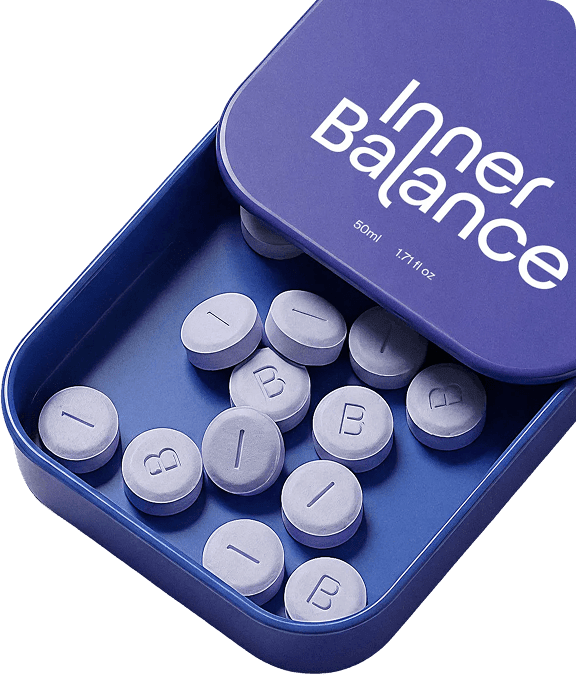
Inner Balance’s Libida™ takes this science further by combining bremelanotide with oxytocin, creating the first dual-pathway solution that addresses both the neurochemical spark of desire and the emotional connection pathways that shape women’s sexuality. Unlike treatments designed for men and repurposed for women, this approach was built on understanding how female desire actually works.
HSDD Prevalence Statistics
1. 10% of women aged 18-44 experience HSDD
Hypoactive Sexual Desire Disorder affects approximately 10% of women in their reproductive years, translating to several million U.S. women. This isn’t a rare condition—it’s a widespread experience that has been chronically undertreated and misunderstood. HSDD is characterized by persistently low or absent sexual desire that causes significant personal distress. The distinction matters: low desire alone isn’t a disorder, but when it creates distress and impacts your quality of life, effective treatment exists and you deserve access to it. Source: PMC research
2. Sexual distress peaks at 14.8% in women aged 45-64
Sexual distress is most common during midlife, affecting 14.8% of women aged 45-64 compared to 10.8% of younger women and 8.9% of older women. This timing aligns with perimenopause and menopause, when hormonal shifts can compound desire issues. However, hormonal optimization alone doesn’t always restore desire—which is why brain-acting treatments like bremelanotide fill a critical gap. For women whose hormones are balanced through Oestra™ but whose desire still feels muted, Libida™ offers the neurological support that hormones can’t provide. Source: MDPI
3. 30-50% of sexually active women experience some form of sexual dysfunction
Between 30% and 50% of sexually active women experience sexual dysfunction of some kind, including not just low desire but also arousal difficulties, orgasm challenges, and pain. The high prevalence underscores that these aren’t personal failures—they’re common experiences with biological underpinnings that respond to appropriate treatment. Source: Mordor Intelligence
Clinical Efficacy Statistics
4. 58.3% response rate in Phase 3 clinical trials
The RECONNECT Phase 3 trials demonstrated that 58.3% and 58.2% of women using bremelanotide met response criteria, compared to just 36.1% and 35.4% with placebo. These weren’t small studies—1,267 women were randomized across the trials, providing robust evidence of efficacy. A response rate approaching 60% is clinically meaningful, particularly for a condition that has historically had few effective treatments. Source: MDPI
5. Statistically significant desire increase of 0.35 (p<0.001)
Women taking bremelanotide showed a statistically significant increase in sexual desire of 0.35 compared to placebo. While this number may seem abstract, the effect size of 0.39 indicates a meaningful clinical difference. More importantly, women reported increases in sexual thoughts, fantasies, and anticipation—the subjective experience of actually wanting intimacy again. Source: PMC research
6. Distress reduction of -0.33 (p<0.001)
Beyond increasing desire, bremelanotide significantly reduced distress by -0.33 compared to placebo. This dual effect—boosting desire while reducing the emotional burden of low libido—addresses both dimensions of HSDD. The distress reduction may be equally important as the desire increase, as it reflects improved quality of life and reduced relationship strain. Source: ACOG
7. 50% increase in satisfying sexual events vs. 12% with placebo
Phase 2b trials showed that bremelanotide resulted in a 50% increase in satisfying sexual events compared to just 12% with placebo. This four-fold difference demonstrates that the treatment translates to real-world improvements in women’s sexual experiences, not just changes on clinical scales. Source: Yahoo
8. Sexual satisfaction doubled compared to placebo
The percentage of sexual events that were satisfying increased more than two-fold—25% versus 9.8%—in the bremelanotide group compared to placebo. When women feel desire, engage in intimacy, and find it satisfying, the entire experience transforms. This statistic captures that transformation. Source: MDPI AG
Safety and Tolerability Statistics
9. 40% experience nausea, but 98% of cases are mild to moderate
Yes, 40% of bremelanotide users experience nausea—but context matters. Among those who experience nausea, approximately 98% report it as mild to moderate in severity. The nausea has a median onset of 30 minutes and typically resolves within 2.4 hours. For most women, this temporary discomfort is a reasonable trade-off for restored desire. Source: Springer Nature
10. Only 8.1% discontinue treatment due to nausea
Despite the 40% nausea rate, only 8.1% of patients discontinued bremelanotide due to this side effect. This low discontinuation rate suggests that women find the benefits worth the temporary side effects. Additionally, using an antiemetic reduced subsequent nausea rates from approximately 15% to 5%. Source: NIH
11. 80% of trial completers elected for extended use
Among the 856 patients who completed the double-blind core study phase, approximately 80% (684 patients) elected to participate in the open-label extension. This high continuation rate speaks volumes about patient satisfaction—women who experienced the benefits chose to continue treatment when given the option. Source: National Library of Medicine
Pharmacokinetics and Administration
12. 100% bioavailability via subcutaneous injection
Bremelanotide demonstrates 100% bioavailability when administered subcutaneously, meaning the full dose reaches systemic circulation. However, injections present a significant barrier for many women. This is why sublingual formulations like Libida™ offer an important alternative—delivering the active ingredient without needles while adding oxytocin for enhanced emotional connection. Source: PMC pharmacology
13. Peak concentration reached in approximately 1 hour
After administration, bremelanotide takes approximately 1 hour to reach maximum plasma concentration, with a half-life of 2.5 hours. This pharmacokinetic profile supports on-demand use approximately 45-60 minutes before anticipated intimacy, allowing women to plan rather than take daily medication. Source: MDPI AG
14. Clinical trials used on-demand dosing protocols
Clinical trials utilized on-demand dosing protocols with average usage being 1 time per week or 2-3 times monthly. This on-demand approach respects women’s autonomy—you use it when you want to feel desire, not every day regardless of plans. Specific dosing should be determined in consultation with your healthcare provider. Source: NLM
Market and Access Statistics
15. Market estimated at $549.80 million in 2025, projected to reach $947.60 million by 2030
The global female sexual dysfunction treatment market is estimated to be valued at $549.80 million in 2025 and is projected to reach $947.60 million by 2030. This growth reflects increasing recognition that women’s sexual health deserves the same attention and investment as men’s. For too long, female desire has been neglected by pharmaceutical development—that’s finally changing. Source: Mordor Intelligence
16. Bremelanotide segment growing at 12% CAGR—the fastest in the category
The bremelanotide segment is projected to achieve a 12.0% CAGR from 2025 to 2030, making it the fastest-growing category in female sexual dysfunction treatment. This growth indicates that women and their healthcare providers are increasingly recognizing brain-first approaches as effective solutions for desired disorders. Source: Mordor Intelligence
17. North America commands 65% market share
North America maintains a dominant position, commanding approximately 65% of the market share in 2024. This concentration reflects both higher awareness and greater access to treatment in the U.S., though it also highlights global disparities in women’s sexual health care. Source: Mordor Intelligence
18. $12 billion requested for women’s health research advancement
In May 2024, the U.S. government requested $12 billion for women’s health research advancement, signaling unprecedented governmental commitment to understanding and treating conditions like HSDD. This investment may accelerate development of even better treatment options in coming years. Source: Intramural Research Program
Comparative Effectiveness
19. Bremelanotide effect size of 0.39 for desire improvement
When comparing treatments, bremelanotide demonstrates an effect size of 0.39 for improving sexual desire, while flibanserin (Addyi) shows effect sizes of 0.29-0.44. However, the key difference lies in administration: bremelanotide is on-demand while flibanserin requires daily use with alcohol restrictions. For women who want flexibility, on-demand options offer significant lifestyle advantages. Source: National Library of Medicine
20. 2006 early studies showed significant satisfaction improvements
Even early research demonstrated bremelanotide’s promise. In a 2006 clinical study, significantly more women reported moderate or high sexual desire following bremelanotide treatment versus placebo (P = 0.0114). Among women who attempted intercourse within 24 hours, significantly more were satisfied with their arousal level (P = 0.0256). This early evidence laid the groundwork for the comprehensive clinical program that followed. Source: PubMed research
What This Means for You
The data paints a clear picture: if your desire feels muted, disconnected, or missing—you’re not broken, and effective treatment exists. Bremelanotide works through brain pathways rather than hormones alone, which explains why it helps women whose hormonal balance is already optimized through treatments like Oestra™.
Libida™ represents the evolution of this science. By combining bremelanotide with oxytocin in a sublingual tablet, it addresses both the neurochemical spark of desire (via dopamine activation) and the emotional connection pathways (via oxytocin) that shape women’s arousal patterns. No injection required. No daily medication. Just on-demand support when you want to feel like yourself again.
At approximately $8-$10 per experience, Libida™ offers the most cost-effective bremelanotide option available—significantly less than competitor injections at $25-$130+ per use.
Frequently Asked Questions
What is the difference between PT-141 and bremelanotide?
PT-141 is the research designation for bremelanotide—they’re the same compound. Bremelanotide is the FDA-approved active ingredient used in the injectable treatment Vyleesi. Libida™ contains this same FDA-approved active ingredient in a compounded sublingual formulation for off-label use under clinician guidance, combined with oxytocin for enhanced emotional connection.
How does bremelanotide specifically target low libido in women?
Bremelanotide activates melanocortin receptors (MC4R) in the hypothalamus, boosting dopamine—the neurotransmitter responsible for motivation, anticipation, and sexual desire. Unlike hormonal treatments that work on the body, bremelanotide works on the brain where desire actually originates.
Is bremelanotide effective for women who have tried HRT but still experience low desire?
Yes. Because bremelanotide works through neurological pathways rather than hormonal ones, it can help women whose desire remains flat even after hormonal optimization. This makes it an ideal complement to treatments like Oestra™—not a replacement.
What are the main advantages of sublingual bremelanotide over injectable forms?
Sublingual formulations like Libida™ eliminate the need for self-injection, making treatment more accessible and less intimidating. Additionally, Libida™ combines bremelanotide with oxytocin—something no injectable option provides—addressing both desire and emotional connection.
Are there contraindications for bremelanotide?
Bremelanotide is not appropriate during pregnancy, breastfeeding, uncontrolled hypertension, or certain cardiovascular conditions. A consultation with a healthcare provider determines if it’s right for you.


