



If you love your partner but rarely feel desire for intimacy, you’re not imagining things—and you’re definitely not alone. What you’re experiencing has a name: Hypoactive Sexual Desire Disorder, or HSDD. It’s one of the most common sexual health concerns women seek help for—yet it remains under-discussed—one survey found 81% of postmenopausal women with low desire never mentioned it to their healthcare provider. The good news? HSDD is highly treatable once you understand the root cause—and solutions like Libida™ from Inner Balance are specifically designed to address both the neurological and emotional pathways that drive female desire.
Key Takeaways
- HSDD affects 10-15% of women and is characterized by persistent low desire that causes personal distress—not simply having less interest than your partner
- Diagnosis is straightforward using a validated 4-question screening tool, and lab work isn’t required to start treatment
- Multiple treatment options exist: FDA-approved medications, hormone therapy, psychotherapy, and innovative dual-pathway solutions
- Libida™ is the first treatment combining bremelanotide (dopamine activation) with oxytocin (emotional connection)—addressing how female desire actually works
- Hormonal foundation matters: For women whose low libido stems from hormone imbalance, Oestra™ provides systemic support that can restore desire at its source
- You can start treatment today through Inner Balance’s telehealth platform, licensed in all 50 states


What HSDD Actually Means
More Than Just “Not in the Mood”
HSDD isn’t about having an occasional dry spell or preferring sleep over sex after a stressful week. The clinical definition requires two key components: persistently absent or reduced sexual fantasies and desire, plus marked personal distress about that absence.
This distress component matters enormously. A woman who has low desire but feels perfectly content isn’t experiencing HSDD—she simply has different preferences. But if you grieve the loss of your sexual spark, feel disconnected from your partner, or wonder what happened to the woman you used to be, that distress signals something worth addressing.
Research shows 43% of U.S. women report sexual concerns, with low desire topping the list. Among those, 8.9% of women aged 18-44 and 12.3% aged 45-65 meet full HSDD diagnostic criteria. During the menopausal transition, that number climbs to 40-55%.
Generalized vs. Situational
HSDD can present in different patterns. Generalized HSDD means you lack desire across all situations and with all partners. Situational HSDD occurs only in specific contexts—perhaps with one partner but not another, or in certain environments.
Most women seeking treatment have acquired, generalized HSDD—meaning desire existed once but has disappeared. This pattern often responds well to medical treatment because it suggests something changed in your body or brain chemistry.
Why Your Spark Might Be Gone
The Brain Chemistry Behind Desire
Female desire operates on what researchers call the Dual Control Model—a balance between excitatory pathways (the “gas pedal”) and inhibitory pathways (the “brakes”). HSDD develops when excitation becomes inadequate, inhibition becomes excessive, or both happen simultaneously.
Excitatory factors include:
- Dopamine—the primary driver of motivation and wanting
- Norepinephrine—promotes arousal and focused engagement
- Oxytocin—supports bonding, orgasm, and desire
- Testosterone—initiates sexual interest
- Estradiol—facilitates dopamine release and promotes oxytocin secretion
Inhibitory factors include:
- Serotonin—associated with satiety and suppressed reward-seeking
- Opioid peptides—promote sexual satiety
- Stress hormones—shift resources away from reproduction
- Psychological factors—anxiety, depression, body image concerns
Understanding this model explains why HSDD treatments target different pathways—and why addressing multiple factors often works best.
The Hormone Connection
For many women, declining hormones play a foundational role. Estradiol promotes dopamine release and stimulates oxytocin—both essential for desire. Progesterone influences mood, sleep, and stress resilience, which indirectly affects libido. When these hormones decline during perimenopause, the cascade affects multiple systems.
According to Inner Balance data, approximately 75% of women using Oestra™ experience improved sex drive and arousal—evidence that addressing hormonal root causes can restore desire.
Beyond Hormones: Other Contributors
HSDD rarely has a single cause. Common contributing factors include:
- Medications: SSRIs, antipsychotics, blood pressure medications, and opioids commonly suppress desire
- Medical conditions: Diabetes, thyroid disorders, chronic pain
- Psychological factors: Depression, anxiety, history of trauma, body image concerns
- Relationship dynamics: Communication issues, unresolved conflict, partner sexual problems
- Life circumstances: Stress, sleep deprivation, childcare demands
A thorough assessment considers all these factors—something Inner Balance’s physician-led model addresses through comprehensive telehealth consultations.
How HSDD Is Diagnosed
The 4-Question Screener
Diagnosis doesn’t require complex testing. The Decreased Sexual Desire Screener (DSDS) identifies HSDD with 85% diagnostic accuracy using four simple questions:
- In the past, was your level of sexual desire good and satisfying to you?
- Has there been a decrease in your level of sexual desire?
- Are you bothered by your decreased level of sexual desire?
- Would you like your level of sexual desire to increase?
If you answer “yes” to all four—and no other medical condition, medication, or relationship issue fully explains your symptoms—you likely have HSDD.
Why Labs Usually Aren’t Needed
Here’s something most women find surprising: hormone blood tests correlate poorly with sexual desire. Women with HSDD don’t consistently show different hormone levels than women without it. That’s why leading guidelines recommend symptom-based treatment rather than lab-driven protocols.
At Inner Balance, we believe in listening to how you feel—not just your numbers. Your symptoms tell the real story.
When Additional Evaluation Helps
Physical examination and lab work become useful when:
- You have irregular periods suggesting hormonal disruption
- Symptoms of PCOS or thyroid disease are present
- You’re taking medications known to affect sexual function
- Vaginal dryness or pain accompanies low desire
- You’ve experienced surgical menopause
Hormonal Approaches: Building the Foundation
Why Hormones Matter for Desire
When low libido stems from hormone imbalance—particularly declining estradiol and progesterone—restoring these hormones can transform desire from the ground up.
Estradiol supports vaginal tissue health and lubrication, reduces painful intercourse that leads to avoidance, facilitates dopamine release in the brain, and promotes oxytocin secretion essential for desire.
Progesterone stabilizes mood and reduces anxiety, improves sleep quality, supports stress resilience, and converts to testosterone—another desire-enhancing hormone.
The Oestra™ Advantage
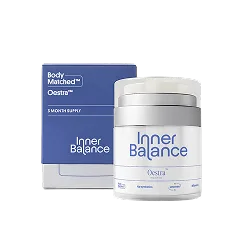
Oestra™ delivers bioidentical estradiol and progesterone vaginally—a method that offers significant advantages over oral alternatives. Vaginal delivery provides significantly higher bioavailability than oral forms because it bypasses liver metabolism that destroys active hormones.
Research confirms vaginal progesterone achieves more stable blood levels with less variability than oral progesterone—meaning fewer mood swings, no morning grogginess, and more consistent symptom relief.
Inner Balance studies show 97% of women experience improved vaginal dryness with Oestra™, addressing a common barrier to intimacy that perpetuates low desire.
Beyond Hormones: Brain-Based Solutions
When Hormones Aren’t Enough
Some women optimize their hormones yet still find desire feels flat. Others have normal hormone levels but struggle with HSDD. For these women, the brain pathways controlling desire need direct activation.
This is where treatments targeting the central nervous system come in. FDA-approved options include flibanserin (Addyi), a daily oral pill that modulates serotonin and indirectly increases dopamine, and bremelanotide (Vyleesi), an on-demand injection that activates melanocortin receptors to boost dopamine activity.
Both work—but both have limitations Flibanserin requires daily dosing with alcohol restrictions and can cause somnolence/sedation/fatigue in a meaningful percentage of women. Bremelanotide requires self-injection and causes nausea in around 40% of users.
The Missing Piece: Emotional Connection
Here’s what most HSDD treatments miss: female desire isn’t purely neurochemical. Women’s sexuality involves emotional connection, relational warmth, and feeling safe to be vulnerable. Treatments that only boost dopamine address half the equation.
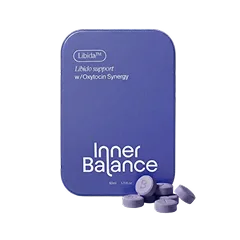
That’s why Inner Balance developed Libida™—the first treatment combining bremelanotide with oxytocin in a sublingual tablet.
Libida™: The Dual-Pathway Difference
How It Works
Libida™ addresses both the neurochemical spark and the emotional readiness that female desire requires:
Bremelanotide activates melanocortin receptors (MC4R) in the hypothalamus, boosting dopamine activity. This creates motivation, sexual thoughts, anticipation, and arousal. It contains the same FDA-approved active ingredient used in Vyleesi—but in sublingual form, no injection needed.
Oxytocin activates bonding and emotional-safety pathways. This supports connection, closeness, relaxation into intimacy, and relational warmth. No other HSDD treatment includes this component.
Together, they reflect how women’s sexuality actually works—not as a simple on/off switch, but as an interplay between wanting and feeling emotionally ready.
What to Expect
Take Libida™ as a tiny sublingual lozenge approximately 45-60 minutes before anticipated intimacy. Effects may last 24-72 hours—meaning a single dose can support an entire weekend.
Clinical evidence for bremelanotide shows increased desire and arousal, more satisfying sexual events, reduced distress, and restored fantasies and responsiveness. The addition of oxytocin enhances emotional connection—something women consistently describe wanting.
Who Libida™ Is For
Libida™ works for women whose desire feels muted, disconnected, or missing entirely. It’s ideal if you identify with “my spark is gone” or “I love my partner, but I never feel like it.” It helps women whose hormones are addressed but desire still feels flat, those who want a non-hormonal, on-demand, brain-first option, and women who haven’t fully responded to hormone therapy alone.
Because Libida™ is non-hormonal, it’s compatible with any hormonal status. You can use it with or without Oestra™.
Comparing Your Options
Finding the Right Fit
Different treatments suit different situations:
Choose hormone therapy (Oestra™) when:
- Perimenopausal or menopausal symptoms are present
- Vaginal dryness or painful intercourse accompanies low desire
- Multiple hormonal symptoms exist (hot flashes, sleep disturbance, mood changes)
- You want foundational support that may resolve desire naturally
Choose brain-based treatment (Libida™) when:
- Hormones are already optimized but desire remains flat
- You want on-demand control rather than daily medication
- Emotional connection feels as important as physical arousal
- You prefer non-hormonal options
Choose combined approach when:
- Multiple contributing factors are present
- Single treatments haven’t fully resolved symptoms
- You want comprehensive support addressing root causes at every level
The Cost Reality
Libida™ starts at around $199/month for approximately 10 doses on subscription, or around $249 for one-time purchase. Compare this to Vyleesi injections at approximately $250 each or Addyi’s ongoing daily cost. HSA/FSA eligible.
When Hormonal and Brain-Based Solutions Work Together
Inner Balance’s ecosystem positions Oestra™ as hormonal optimization (mood, sleep, metabolism, libido foundation) and Libida™ as neurological desire amplification (sexual motivation, fantasies, responsiveness, bonding).
Think of Oestra™ as restoring the conditions that make desire possible—balanced hormones, comfortable vaginal tissue, stable mood. Libida™ then activates the brain pathways that create actual wanting.
For many women, addressing hormones alone resolves low desire. For others, Libida™ provides the missing piece. The combination creates comprehensive sexual wellness support addressing body and brain together.
Taking Control of Your Sexual Wellness
Why Women Don’t Seek Help—And Why That’s Changing
More than half of women report discomfort or embarrassment discussing sexual concerns with healthcare providers. Many believe low desire is “just part of aging” or assume nothing can be done.
But HSDD is treatable. Multiple evidence-based options exist. And telehealth has removed barriers that once kept women from seeking care.
Inner Balance provides physician-led consultations from home, treatment shipped directly to you, ongoing support from a dedicated care team, and symptom-based treatment that listens to how you feel—not just lab numbers.
Your Next Step
If you’ve been dismissing your low desire as normal or wondering what happened to the woman you used to be, consider this your permission to seek answers. Complete Inner Balance’s 5-minute health assessment to connect with a physician who specializes in women’s sexual health.
Your symptoms have a root cause—and real solutions exist.
Frequently Asked Questions
What’s the difference between low libido and HSDD?
Low libido simply means reduced sexual desire. HSDD requires that low desire causes you personal distress or relationship difficulties, persists for at least six months, and isn’t fully explained by another medical condition, medication, or relationship issue. The distress component distinguishes normal variation in desire from a diagnosable condition worth treating.
Can HSDD be treated with hormones alone?
For many women, yes—especially when low desire stems from hormonal imbalance during perimenopause or menopause. According to Inner Balance data, approximately 75% of women using Oestra™ report improved sex drive. However, women whose desire remains flat after hormonal optimization may benefit from adding brain-based treatments like Libida™.
How quickly can I expect results from HSDD treatment?
Libida™ works on-demand, with effects beginning 45-60 minutes after use and potentially lasting 24-72 hours. Hormone therapy typically shows initial improvements within 2-4 weeks, with full benefits developing over 3-6 months as tissue restoration occurs and hormones reach steady state.
Are there side effects with Libida™?
Bremelanotide (the active ingredient) may cause temporary nausea, flushing, or headache in some women. The sublingual delivery of Libida™ typically produces lower nausea rates than injectable forms. Libida™ isn’t appropriate during pregnancy, breastfeeding, or for women with uncontrolled hypertension or certain cardiovascular conditions—your Inner Balance physician will screen for these during consultation.
Can I use Libida™ with hormone therapy?
Yes. Libida™ is non-hormonal and works through brain pathways, making it compatible with any hormonal status. Many women use Libida™ alongside Oestra™ for comprehensive support—hormones creating the foundation, Libida™ activating desire when wanted.