


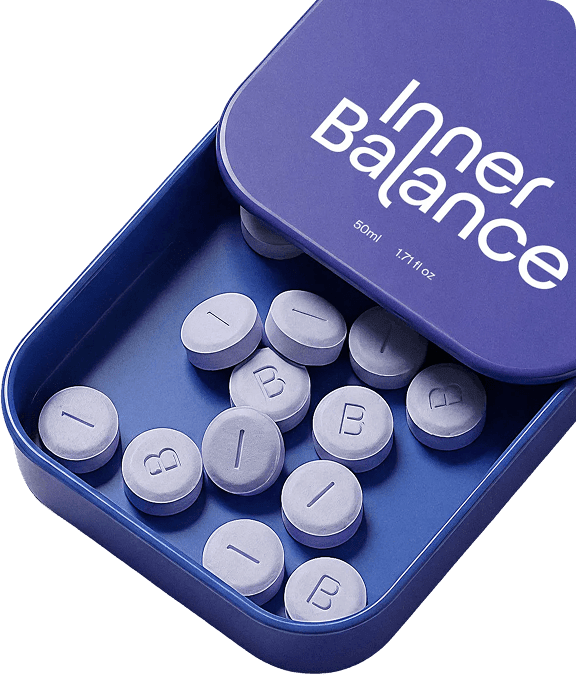
If your desire for intimacy feels muted or missing, you’re not alone. Nearly 40% of women experience sexual dysfunction at some point, with low libido being the most common complaint. The frustration of loving your partner but never “feeling like it” drives many women to search for answers beyond conventional medicine. Ashwagandha has emerged as a promising option, with clinical research suggesting real benefits for sexual function. But there’s a crucial distinction between improving how sex feels and creating the actual want to have it—and understanding this difference changes everything. For women whose desire feels genuinely absent rather than just stress-dampened, Inner Balance’s Libida™ offers a targeted, on-demand solution that works directly on the brain pathways where desire originates.
Key Takeaways
- Clinical evidence exists: Multiple randomized controlled trials show ashwagandha improves arousal, lubrication, orgasm quality, and sexual satisfaction in women
- Mechanism matters: Ashwagandha works primarily through stress reduction (lowering cortisol by up to 27.9%), which removes barriers to sexual function—but doesn’t directly activate desire
- Function vs. desire: Research shows stronger improvements in sexual response than spontaneous wanting, with one major study finding no significant improvement in the desire domain
- Standard dosing: 300mg of standardized root extract twice daily (600mg total) for 4-8 weeks shows optimal results
- Safety profile: Side effects are minimal and comparable to placebo, though liver and thyroid conditions require caution
- The missing piece: When stress management isn’t enough, direct desire activation through dual-pathway solutions like Libida™ addresses both neurochemical spark and emotional connection


Understanding Female Libido: Beyond Simple Explanations
What Drives Women’s Sexual Desire?
Female sexuality is complex. Women’s desire doesn’t work like an on/off switch. It involves intricate interactions between hormones, neurotransmitters, emotional connection, stress levels, sleep quality, relationship dynamics, and self-image.
The brain plays a central role. Dopamine creates the “wanting” and motivation for sexual activity. Oxytocin supports bonding, emotional safety, and the ability to relax into intimacy. When either pathway is disrupted—whether by chronic stress, hormonal shifts, or neurochemical imbalances—desire diminishes or disappears entirely.
What Is Hypoactive Sexual Desire Disorder (HSDD)?
HSDD affects approximately 10% of women and is characterized by persistently low sexual desire that causes personal distress. It’s not about how often you have sex—it’s about the absence of sexual thoughts, fantasies, and motivation despite wanting to feel desire.
Women with HSDD often describe their experience as:
- “My spark is gone”
- “I love my partner, but I never feel like it”
- “Sex feels like another item on my to-do list”
- “I remember wanting intimacy, but I can’t access that feeling anymore”
This isn’t about stress occasionally dampening your mood. It’s a persistent disconnection from desire itself—and it requires solutions that address where desire actually originates: the brain.
Ashwagandha’s Role in Female Wellness
More Than a Libido Supplement
Ashwagandha (Withania somnifera) is an adaptogenic herb with a 3,000-year history in Ayurvedic medicine. While its effects on female sexual function have gained attention recently, the herb’s benefits extend across multiple body systems.
Stress and Cortisol Regulation
Chronic stress is one of the most potent libido killers. When cortisol stays elevated, your body prioritizes survival over reproduction, suppressing the hormonal pathways that drive sexual desire. Clinical research shows ashwagandha reduces cortisol levels by up to 27.9% in stressed individuals, helping restore normal hypothalamic-pituitary function.
Energy and Vitality
Fatigue is a major barrier to sexual activity. When you’re exhausted, intimacy becomes the last thing on your mind. Ashwagandha supports energy production and reduces the physical exhaustion that inhibits desire.
Mood and Anxiety
Depression and anxiety frequently co-occur with sexual dysfunction. Ashwagandha’s effects on GABA receptors and stress hormones help stabilize mood, potentially removing psychological barriers to intimacy.
The Stress-Libido Connection
Understanding why ashwagandha helps requires understanding how stress destroys desire. When you’re under chronic stress:
- Cortisol suppresses gonadotropin-releasing hormone (GnRH)
- This reduces estrogen, progesterone, and testosterone production
- Neurotransmitters like dopamine decline
- Your nervous system stays in “fight or flight” mode
- Sexual arousal becomes physiologically difficult
By addressing the cortisol piece, ashwagandha creates space for your sexual response system to function normally again. Think of it as removing the brakes rather than pressing the accelerator.
Does Ashwagandha Enhance Female Libido? The Clinical Evidence
The Landmark 2015 Pilot Study
The first rigorous investigation into ashwagandha and female sexual function enrolled 50 women aged 21-50 with diagnosed sexual dysfunction. Participants received either 300mg of standardized ashwagandha root extract twice daily or placebo for eight weeks.
Results were significant across multiple domains:
- Overall sexual function (FSFI score): Increased from 14.36 to 23.86 in the ashwagandha group versus 14.48 to 20.06 with placebo (p<0.001)
- Arousal: Significant improvement at both 4 and 8 weeks (p<0.001)
- Lubrication: Significant improvement at both timepoints (p<0.001)
- Orgasm: Improved significantly by week 8 (p=0.001)
- Satisfaction: Significant improvement (p<0.001)
- Sexual distress: Decreased from 16.28 to 6.36 with ashwagandha versus minimal change with placebo (p<0.001)
- Successful sexual encounters: Increased 126% in the ashwagandha group versus 61% with placebo
The critical finding: The study showed no significant improvement in the desire domain (p=0.119). Ashwagandha improved how sex felt and how women responded once engaged—but didn’t reliably increase the spontaneous wanting.
The 2022 Confirmatory Study
A larger randomized controlled trial with 80 women confirmed and extended these findings. Using the same dosing protocol (300mg twice daily for 8 weeks), researchers found:
- FSFI total score: Improved from 14.20 to 22.62 with ashwagandha (p<0.0001)
- Overall sexual function improved: The ashwagandha group showed stronger gains in total sexual-function scores, with clearer advantages in arousal, lubrication, orgasm, satisfaction, pain, sexual distress, and satisfying sexual encounters than in desire itself
- Sexual distress: Decreased from 17.32 to 8.16 (p<0.0001)
- Successful encounters: Increased 2.32 times baseline versus 1.11 times with placebo (p<0.0001)
This larger study showed strong overall sexual-function gains, but it did not clearly establish a stronger desire-specific effect versus placebo. The bigger takeaway is that ashwagandha appears more reliable for improving sexual response and reducing distress than for consistently restoring desire itself.
What the Research Really Tells Us
Ashwagandha legitimately improves multiple aspects of female sexual function. The evidence is strong for:
- Better arousal response
- Improved lubrication
- Enhanced orgasm quality
- Greater sexual satisfaction
- Reduced distress about sexual problems
The evidence is less consistent for:
- Spontaneous sexual desire
- Sexual thoughts and fantasies
- Motivation to initiate intimacy
This distinction matters enormously. If stress is suppressing your ability to respond sexually, ashwagandha may be exactly what you need. If your desire itself feels absent—if you can’t remember the last time you genuinely wanted intimacy—you may need something that targets desire pathways directly.
Optimal Ashwagandha Dosage for Female Libido
Evidence-Based Dosing Protocol
Every clinical trial demonstrating benefits for female sexual function used the same dosing approach:
- Dose: 300mg of standardized root extract
- Frequency: Twice daily (600mg total)
- Timing: After meals (typically breakfast and dinner)
- Form: Capsules taken with water
- Duration: Minimum 4 weeks, optimal results at 8 weeks
Extract Quality Matters
Not all ashwagandha supplements are equivalent. The clinical trials used standardized ashwagandha root extracts, with product-specific differences in formulation and branding:
- Standardization: >5% withanolides (active compounds)
- Extraction method: Water-based (no alcohol or chemical solvents)
- Plant part: Root only
- Testing: Third-party verified for purity and potency
When selecting a supplement, look for:
- Clearly stated withanolide percentage (minimum 5%)
- “Root extract” or “root only” on the label
- Third-party testing certification
- No “proprietary blends” hiding actual contents
Timeline for Results
Ashwagandha is not an on-demand solution. Expect a gradual building of effects:
- Weeks 1-2: Minimal changes in sexual function; possible improvements in sleep and stress
- Weeks 3-4: Early improvements in arousal and lubrication begin appearing
- Weeks 6-8: Maximum improvements across all domains
If you need support for a specific occasion or want results faster than 4-8 weeks, ashwagandha alone won’t meet that need.
Potential Side Effects of Ashwagandha for Women
What the Clinical Data Shows
In the clinical studies discussed here, ashwagandha was generally well tolerated, with side effects that were uncommon and usually mild, such as nausea, drowsiness, or stomach upset.
In the female sexual function studies specifically, side effects were minimal. The 2022 trial reported only 3 women in the ashwagandha group experienced any effects (2 with nausea, 1 with drowsiness)—identical to the placebo group rate.
Rare but Important Concerns
Liver Toxicity
Rare cases of liver injury have been reported with ashwagandha use. Most reported cases improve after the product is stopped, but the reaction can be serious, so caution is warranted—especially in people with existing liver disease or when product quality is uncertain.
Thyroid Effects
Ashwagandha can increase thyroid hormone levels. While beneficial for hypothyroid women, those with hyperthyroidism or taking thyroid medications should use caution and monitor levels with their provider.
Who Should Avoid Ashwagandha
Do not use if you are:
- Pregnant or breastfeeding (insufficient safety data)
- Managing hyperthyroidism without medical supervision
- Living with active liver disease
- Taking immunosuppressant medications
- Scheduled for surgery within two weeks
Use with caution and medical guidance if you take diabetes medications, blood pressure medications, thyroid medications, or sedatives.
Ashwagandha for Sleep and Stress: The Indirect Libido Connection
Why Sleep Quality Impacts Sexual Desire
Research shows women with poor sleep quality are 1.48 times more likely to report sexual dysfunction. Women sleeping less than 5 hours nightly have a 63.3% prevalence of sexual problems.
Ashwagandha improves sleep quality by 30-72% depending on baseline sleep issues, working through multiple mechanisms:
- Reducing cortisol that keeps you wired at night
- Supporting GABA activity for calming effects
- Improving overall stress resilience
Better sleep creates a foundation where desire can exist. You cannot want intimacy when you’re exhausted.
The Cortisol-Libido Feedback Loop
Chronic stress creates a vicious cycle:
- High cortisol suppresses sex hormones
- Low sex hormones reduce desire and arousal
- Sexual frustration increases stress
- Higher stress further elevates cortisol
By breaking this cycle at the cortisol level, ashwagandha allows your hormonal and neurochemical systems to normalize. For many women—especially those in perimenopause or high-stress life phases—this foundation-building is exactly what’s needed.
When Ashwagandha Isn’t Enough: Addressing Desire Directly
The Function vs. Desire Distinction
Ashwagandha excels at improving sexual function but shows inconsistent effects on sexual desire.
Function refers to:
- Physical arousal response
- Lubrication
- Ability to orgasm
- Comfort during sex
Desire refers to:
- Spontaneous wanting
- Sexual thoughts and fantasies
- Motivation to initiate
- Anticipation and excitement
If your primary issue is that sex doesn’t feel good anymore or that stress has made your body unresponsive—ashwagandha addresses these concerns well. If your primary issue is that desire itself feels absent—that you can’t remember the last time you genuinely wanted intimacy—you need something that targets the brain pathways where wanting originates.
Why Brain-First Solutions Matter
Women’s desire begins in the brain, not the body. The hypothalamus contains melanocortin receptors (MC4R) that, when activated, boost dopamine and create the neurochemical cascade of wanting, anticipation, and arousal. Simultaneously, oxytocin pathways support emotional bonding, safety, and the ability to relax into intimacy.
Ashwagandha doesn’t directly activate either pathway. It removes barriers like stress and cortisol—but it doesn’t create the spark itself.
Libida™: Targeting Where Desire Originates
For women whose desire needs more than stress management, Libida™ offers what ashwagandha cannot: direct activation of both neurochemical and emotional desire pathways.
How Libida™ Works:
- Bremelanotide activates MC4R receptors in the hypothalamus, boosting dopamine and creating the actual wanting—motivation, sexual thoughts, anticipation, and arousal
- Oxytocin activates bonding and emotional-safety pathways, supporting connection, closeness, and the ability to relax into intimacy
This dual-pathway approach reflects how women’s sexuality actually works. It’s not just about physical arousal—it’s about wanting and connecting. Libida™ is the first women-first libido solution combining both pathways—something no ashwagandha supplement or male-designed medication ever addressed.
Key Differences:
Ashwagandha removes barriers through stress reduction and requires daily use for 4-8 weeks to build effects. Libida™ creates the desire spark directly, works on-demand within 45-60 minutes, targets dopamine activation through MC4R receptors, and provides direct oxytocin pathway support for emotional connection. Effects last 24-72 hours per dose.
A Comprehensive Approach to Sexual Wellness
When to Consider Each Option
Ashwagandha may be your answer if:
- Stress is clearly suppressing your libido
- You’re experiencing perimenopause or menopause transitions
- Sleep deprivation is affecting your desire
- You respond well sexually once you’re in the mood
- You prefer foundational, daily support
Libida™ addresses what ashwagandha cannot if:
- Your desire feels genuinely absent, not just stressed
- Stress management hasn’t restored your spark
- You want on-demand support for specific occasions
- You identify with “my spark is gone” or “I never feel like it”
- Your hormones may be optimized but desire still lags
The Combination Approach
For comprehensive sexual wellness, consider how different solutions address different pieces. Foundation support for stress, sleep, and energy can work alongside direct desire activation. Ashwagandha removes stress barriers while Libida™ activates desire pathways—addressing sexual wellness from multiple angles.
Frequently Asked Questions
How quickly can ashwagandha affect female libido?
Clinical trials show improvements beginning around week 4, with optimal results at week 8 of consistent daily use (300mg twice daily). Unlike on-demand solutions, ashwagandha requires patience and consistent supplementation. If you need support for a specific occasion, ashwagandha won’t provide same-day results—consider Libida™, which works within 45-60 minutes.
Can ashwagandha be taken alongside other libido solutions like Libida™?
Yes. Ashwagandha works through stress reduction and cortisol management, while Libida™ directly activates brain desire pathways. They address different aspects of sexual wellness and can be used together. Ashwagandha provides foundational support; Libida™ provides targeted activation when needed. Always inform your healthcare provider about all supplements and medications you’re taking.
What’s the difference between ashwagandha improving arousal versus improving desire?
Arousal refers to your body’s physical response once sexual activity begins—lubrication, genital sensation, and the ability to become physically excited. Desire refers to the wanting itself—spontaneous sexual thoughts, motivation to initiate, and anticipation of intimacy. Research shows ashwagandha more reliably improves arousal than desire. If your issue is “sex feels fine once we start, but I never want to start,” you may need desire-specific support.
Is ashwagandha safe for women with thyroid conditions?
Ashwagandha can increase thyroid hormone production, which benefits hypothyroid women but may be problematic for those with hyperthyroidism or those taking thyroid medications. Consult your healthcare provider before starting ashwagandha if you have any thyroid condition, and monitor your levels regularly.
How long should I take ashwagandha before deciding if it’s working?
Give ashwagandha a full 8-week trial at the proper dose (300mg twice daily of standardized root extract) before concluding whether it helps. Track your symptoms weekly—noting energy levels, sleep quality, stress responses, and sexual function. If you see improvements in stress and energy but desire still feels absent after 8 weeks, your brain’s desire pathways may need more direct support than stress reduction alone can provide, such as Libida™.
Your symptoms have a root cause—and a real solution. Whether that solution involves foundational stress support, direct desire activation, or both, understanding the difference between removing barriers and creating spark changes how you approach your sexual wellness. For women whose desire feels genuinely absent, Libida™ offers the first dual-pathway approach designed around how women’s sexuality actually works.


